
You are about to swap tokens on a decentralized exchange. The transaction appears ordinary: connect a wallet, choose an asset, approve spending, and confirm the trade. Yet the most consequential detail may be hidden behind the final confirmation. An approval can grant a contract permission to move tokens later, while the swap itself may fail because of slippage, liquidity, or a changing blockchain state. This is why transaction simulation and token approval management should be treated as separate but connected tasks. For US-based DeFi users, especially those operating across Ethereum and other EVM-compatible networks, the practical question is not simply which wallet signs fastest. It is which workflow helps distinguish what a transaction intends to do from what it may actually enable.
Rabby Wallet is designed around that decision point: the wallet sits between a decentralized application and the user’s signing action, attempting to make transaction consequences more legible before approval. Its recent positioning as a wallet for Ethereum and EVM chains reflects a broader change in the category. Browser wallets once focused primarily on key storage and message signing. Modern DeFi wallets increasingly compete on transaction interpretation, risk signals, network handling, and permissions visibility. These features can reduce avoidable mistakes, but they do not eliminate smart-contract risk or replace user judgment.
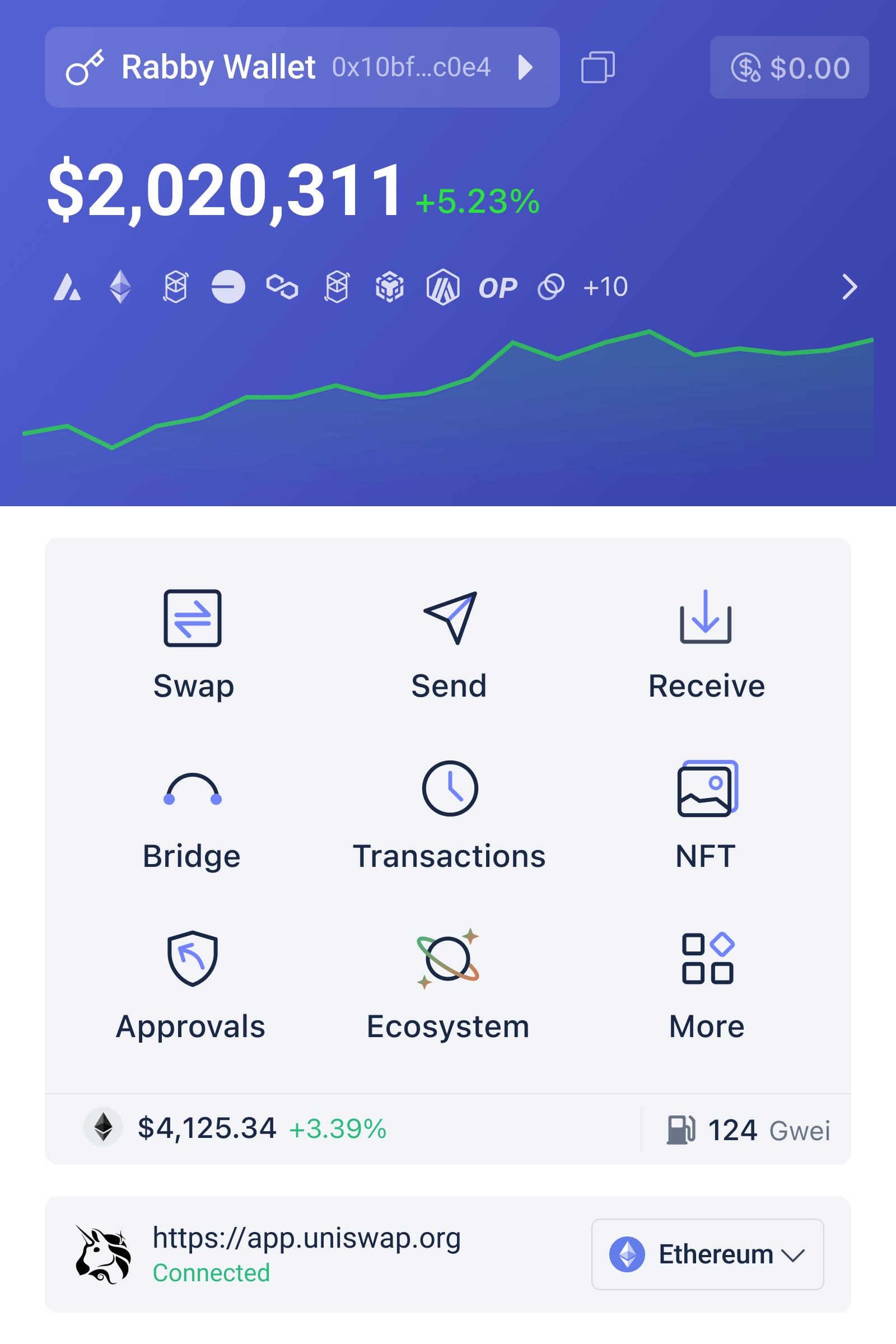
Two approval workflows, two different risk profiles
The traditional workflow is straightforward. A decentralized application requests a token approval, the user confirms it in a wallet, and the application later calls the token contract to transfer the approved amount. The approval is not the swap itself. It is an authorization layer that says, in effect, “this contract may spend up to this amount of my token.” A second transaction may then execute the swap or another DeFi action.
That workflow is efficient, but it can create a dangerous mental shortcut. Users often interpret “approve” as a temporary technical step, even though the permission may remain active until it is changed or revoked. An unlimited approval can be convenient because it avoids repeated approval transactions. It can also enlarge the potential loss if the approved contract is exploited, misconfigured, or malicious. A limited approval reduces exposure but may require another transaction when the allowance is exhausted. The correct choice therefore depends on the value at risk, the contract’s trust assumptions, and the user’s willingness to trade convenience for tighter control.
A more defensive workflow combines allowance review with transaction simulation. Simulation attempts to execute the proposed call against an available representation of the current chain state without broadcasting it. The result may reveal expected token movements, a likely revert, an unexpectedly large balance change, or an interaction with a contract the user did not intend to use. This is more informative than reading a raw function name such as approve or multicall, because the important question is what the complete call is expected to do in context.
The comparison is not “safe wallet versus unsafe wallet.” It is better understood as manual interpretation versus assisted interpretation. A basic wallet may display the transaction data and ask the user to confirm. Rabby can make the pre-signing review more structured by presenting simulation results, approval-related information, and warnings where its available data supports them. For a user who routinely interacts with new protocols, this can reduce cognitive load. For an experienced user, it can provide a second check before signing. Neither approach can guarantee a safe outcome.
What simulation can reveal—and what it cannot
Simulation is powerful because it changes the timing of risk discovery. Instead of learning only after broadcasting that a transaction will revert or produce an unexpected result, the user may see a predicted outcome before paying network fees. A simulation can be especially useful for identifying a mismatch between the user’s intention and the contract call. For example, a user expecting one token transfer might discover that the transaction includes several balance changes, or that a contract is requesting approval for substantially more than the immediate trade requires.
However, simulation is a forecast of execution under particular conditions, not a legal or economic guarantee. Blockchain state can change between simulation and inclusion. Prices can move, liquidity can be consumed, a contract can behave differently depending on block conditions, or a simulation service can lack complete information. Some contracts also use unusual logic that makes interpretation difficult. A successful simulation does not prove that a protocol is honest, solvent, or economically sensible. It primarily answers a narrower question: what appears likely to happen if this call executes against the observed state?
This limitation creates an important distinction between execution risk and protocol risk. Simulation may help with the first by showing a predicted revert or asset movement. It is less capable of resolving the second, which includes upgrade authority, oracle design, governance concentration, economic incentives, and vulnerabilities that do not appear in a single call. A wallet warning should therefore be treated as evidence in a decision, not as a universal safety certification.
Token approval management has a similar boundary. Reviewing allowances can show which contracts have permission to spend a token and whether that permission is narrow or broad. Revoking an allowance can reduce future exposure, but the revocation is itself an on-chain transaction with a fee. It also does not undo transfers that have already occurred. Users must distinguish between removing a permission and recovering lost funds. They are different actions with different technical possibilities.
Where Rabby fits in the historical evolution of wallets
Early browser wallets made the key operational problem visible: users needed a way to sign transactions without handing private keys to every website. As DeFi expanded, that model became insufficient. Transactions grew more composable, protocols operated across multiple EVM networks, and a single confirmation could involve approvals, swaps, liquidity positions, bridges, or contract calls. The wallet’s role consequently shifted from a passive signing window toward an interpretation and risk-management interface.
Rabby belongs to this newer class of wallet experience. Its relevance is not merely that it supports an Ethereum and EVM-oriented environment. The deeper change is the attempt to place analysis before authorization. When a user is considering installation, the useful evaluation criteria are therefore practical: Does the extension clearly identify the active network? Can the user review the expected asset changes? Are approvals visible enough to revisit later? Does the interface make a failed or suspicious transaction understandable rather than merely alarming?
Users considering the browser workflow can review installation information for the rabby extension, while independently checking that the downloaded software and browser permissions match their expectations. This is not a minor precaution. Browser extensions operate close to sensitive wallet actions, so users should verify the source, protect the seed phrase offline, and never enter recovery information into a website or pop-up that requests it.
A reusable framework for DeFi signing decisions
A practical framework is to separate four questions before confirming. First, what asset movement do I intend? Second, which contract is receiving permission, and is the allowance limited to a reasonable amount? Third, does the simulated outcome match the intended action? Fourth, what remains exposed after the transaction completes? The fourth question is often neglected. A swap may succeed while leaving a broad approval active, creating a residual permission that matters more than the completed trade.
For routine activity with a well-understood protocol, users may reasonably prioritize speed and use a limited but convenient approval policy. For a new protocol, a high-value position, or an unfamiliar chain, a slower review is more defensible. That review should include the network, contract identity, approval amount, predicted balance changes, and any warning that cannot be explained. If the simulation fails, the right response is investigation rather than repeated signing. A failed simulation may reflect stale state or an integration problem, but it can also be the earliest visible sign that the intended action is not executable.
The near-term direction of wallet design is likely to depend on how well these systems communicate uncertainty. If simulations become more accurate and approval dashboards more usable, wallets could shift user behavior from blind confirmation toward permission-aware participation. That outcome is conditional, not guaranteed. It depends on reliable data, clear interfaces, protocol cooperation, and users understanding that a warning is not the same as a verdict. The strongest product is not the one that makes every transaction look safe; it is the one that makes uncertainty harder to ignore.
Frequently asked questions
Does transaction simulation guarantee that a DeFi transaction is safe?
No. Simulation estimates what may happen under a particular blockchain state. It can reveal likely failures, unexpected asset movements, or approval details, but it cannot prove that a protocol is secure, solvent, or free from malicious governance or contract logic.
Should I always use unlimited token approvals?
No single policy fits every situation. Unlimited approvals can reduce repeated transactions and fees, while limited approvals reduce the amount a contract can spend if its permission is later abused. For unfamiliar or high-value interactions, a narrower approval is generally easier to justify if the additional transaction cost is acceptable.
What does revoking a token approval accomplish?
Revocation changes or removes a contract’s permission to spend the selected token in the future. It does not reverse previous transfers, recover stolen assets, or make a risky protocol trustworthy. Because revocation requires an on-chain transaction, users should also consider network fees and the value of the exposure being removed.
